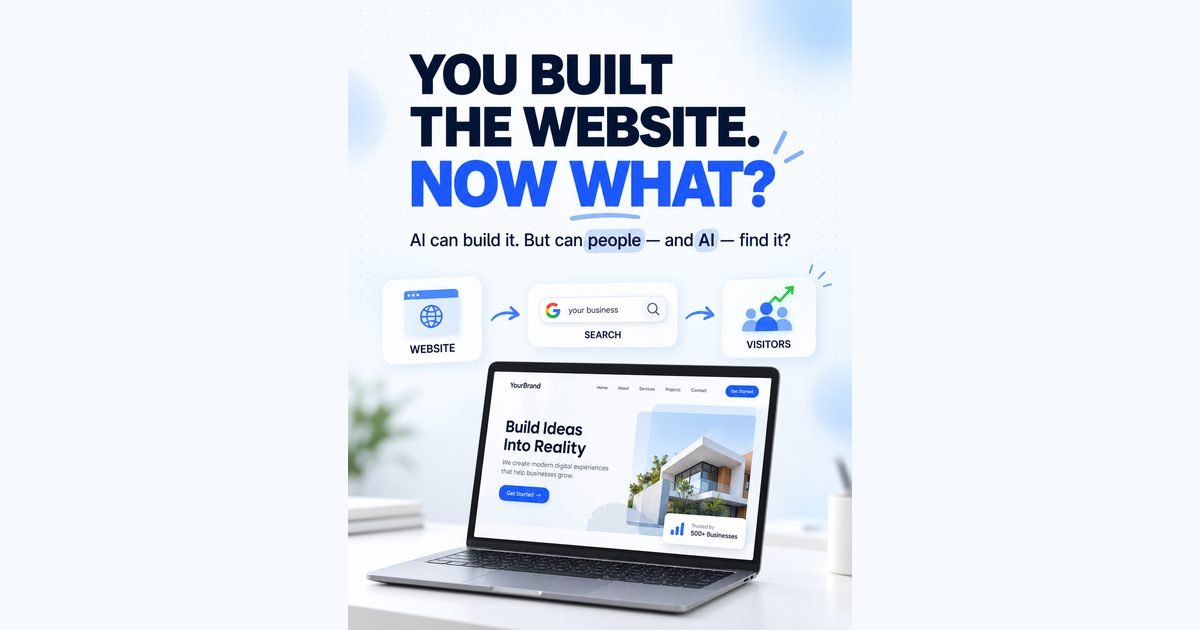
Your customers are asking ChatGPT who to hire. Is it saying your name?
Search didn't die — it split into five. What SEO, AEO, GEO, AIO and SXO mean, what each looks like, and a five-step checklist to stay visible.

Your customers are asking ChatGPT who to hire. Is it saying your name?
Try it now. Open ChatGPT and type: "best [your service] in [your city]". Read the answer.
Not there? Your competitor is getting those customers. Quietly. Every day.
What changed
2020: rank #1 on Google → get customers.
2026: rank #1 on Google → an AI answer appears above you → the customer never scrolls.
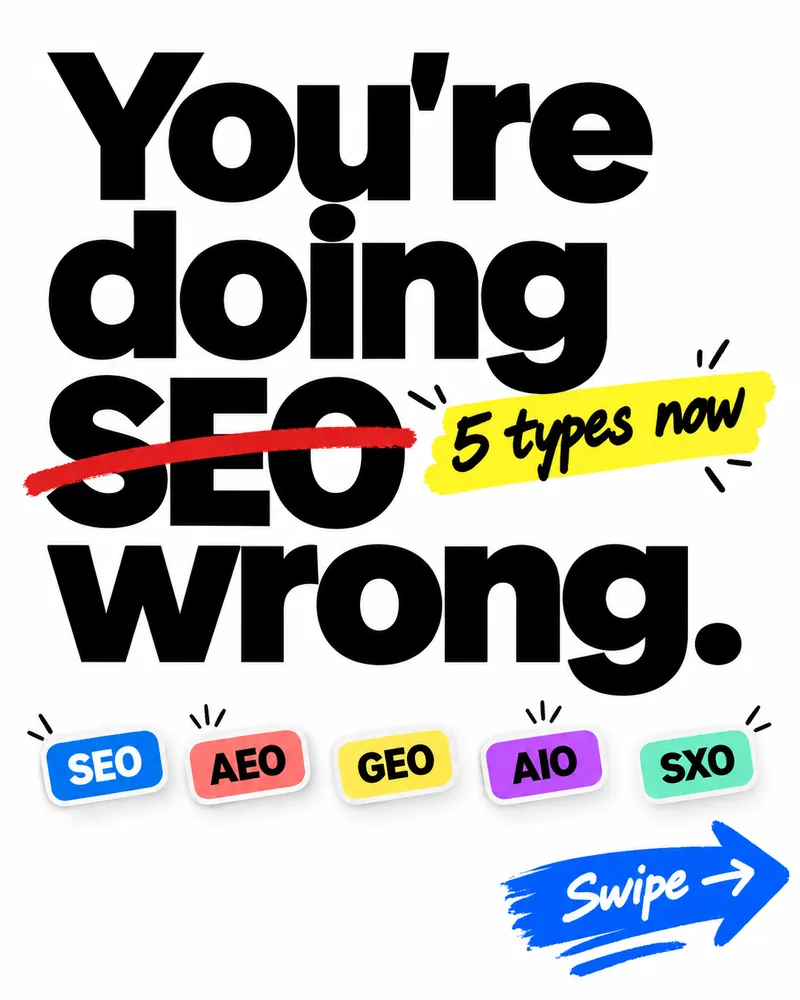
Same effort. Fewer clicks. Google isn't the only search engine anymore — people now ask ChatGPT, Gemini, Claude and Perplexity directly, and they act on the answer.
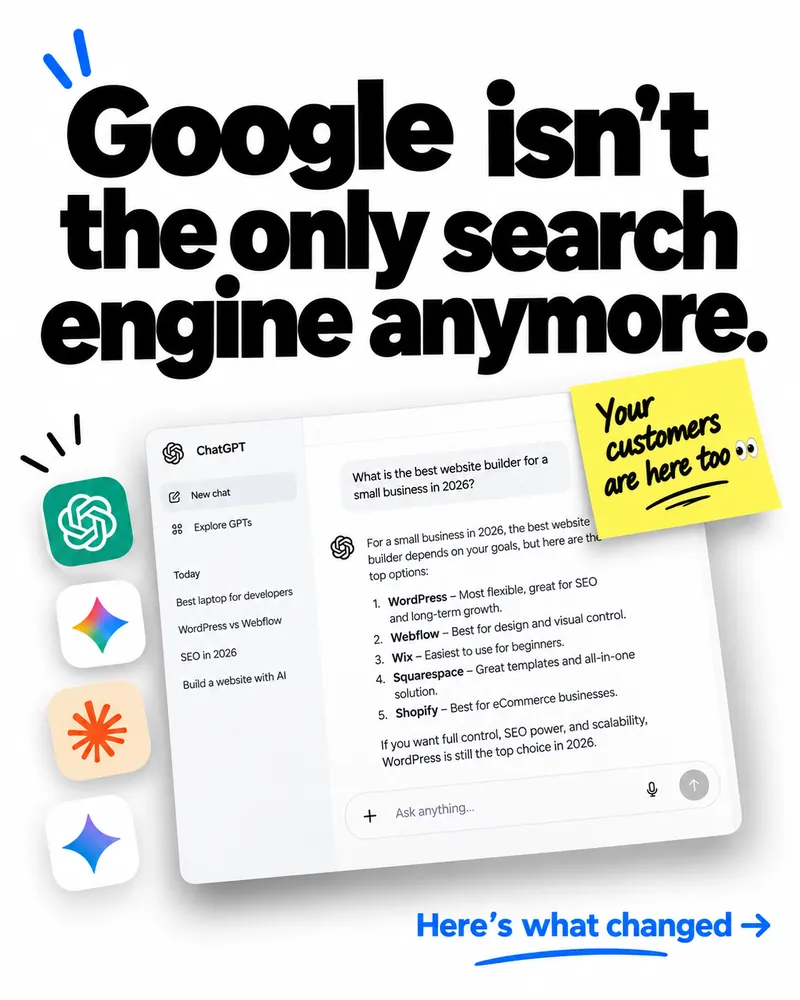
Search didn't die. It split into five. Here's what each one means and what it looks like.
1. SEO — get ranked on Google
Search Engine Optimisation is the classic: appearing in Google's list of results when someone searches. It's still the foundation — the other four mostly build on a site Google can crawl, understand and trust.
What it takes: a fast, crawlable site, clear page titles and headings, useful content, and links from other reputable sites.
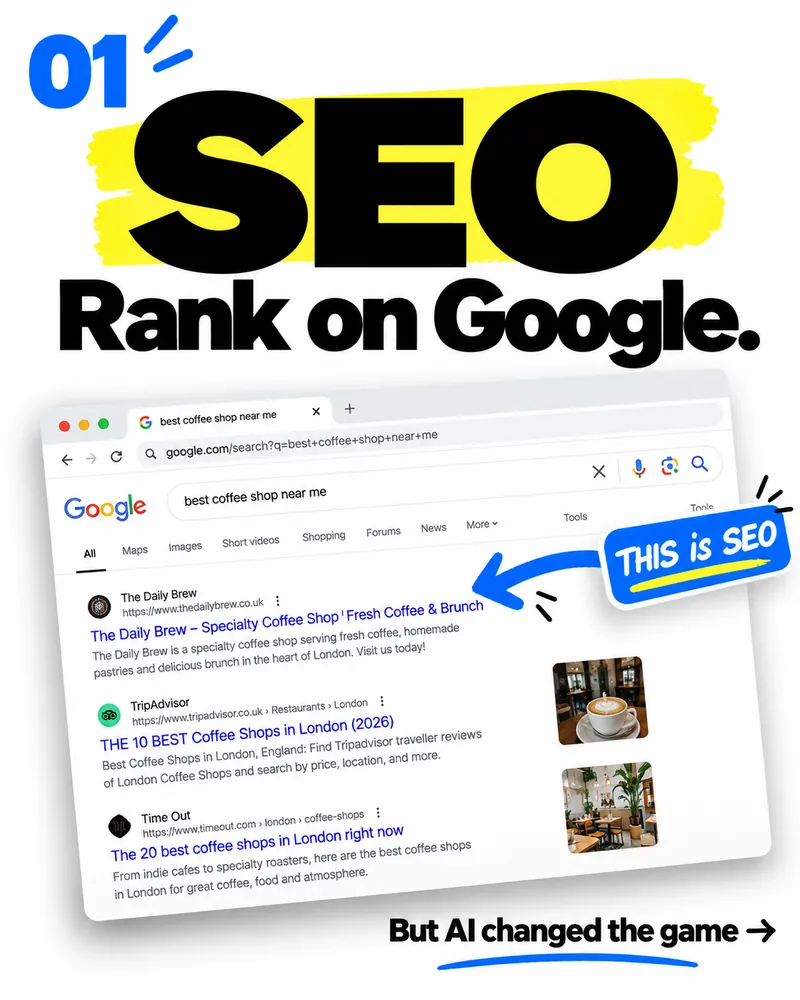
2. AEO — become THE answer
Answer Engine Optimisation means being the answer itself — the highlighted box at the top of Google, or the answer a voice assistant reads out — rather than one link among ten.
What it takes: answer common questions directly, near the top of the page, in two or three clear sentences. Then go into detail.
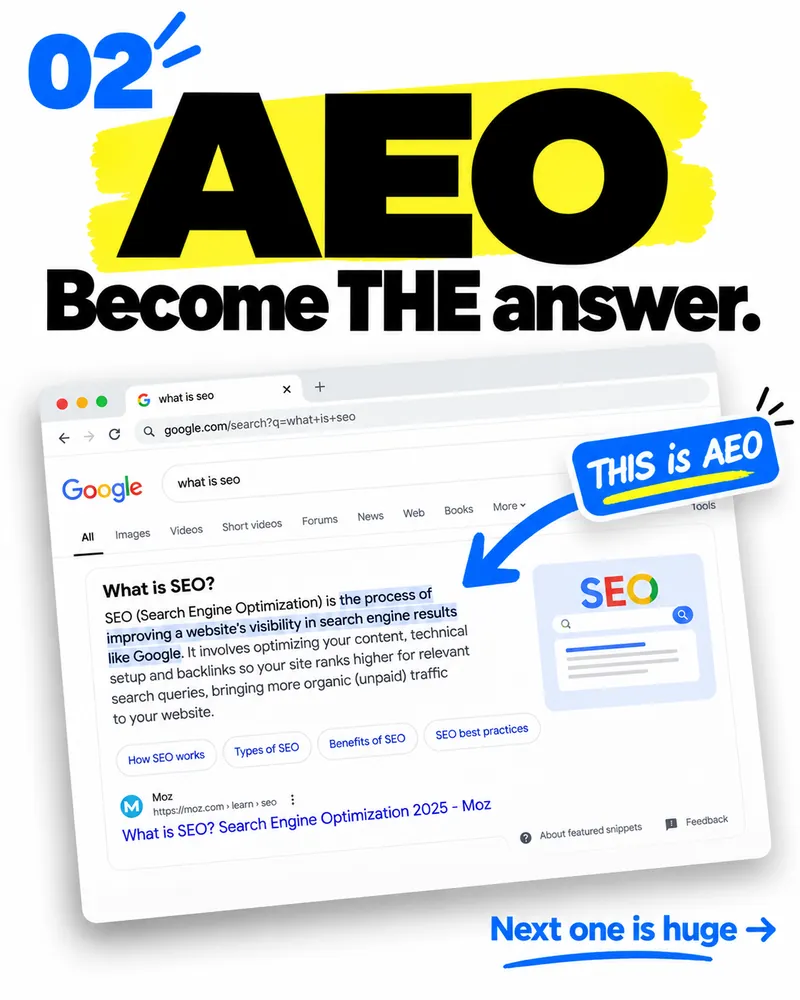
3. GEO — get recommended by ChatGPT
Generative Engine Optimisation is about being named when someone asks an AI assistant for a recommendation — "who's the best web developer for small businesses?"
What it takes: AI assistants recommend brands they see mentioned and described consistently across the web — directories, reviews, articles, your own site. A clear "who we are and what we do" on your website, and mentions on trusted sites, matter more than ever.
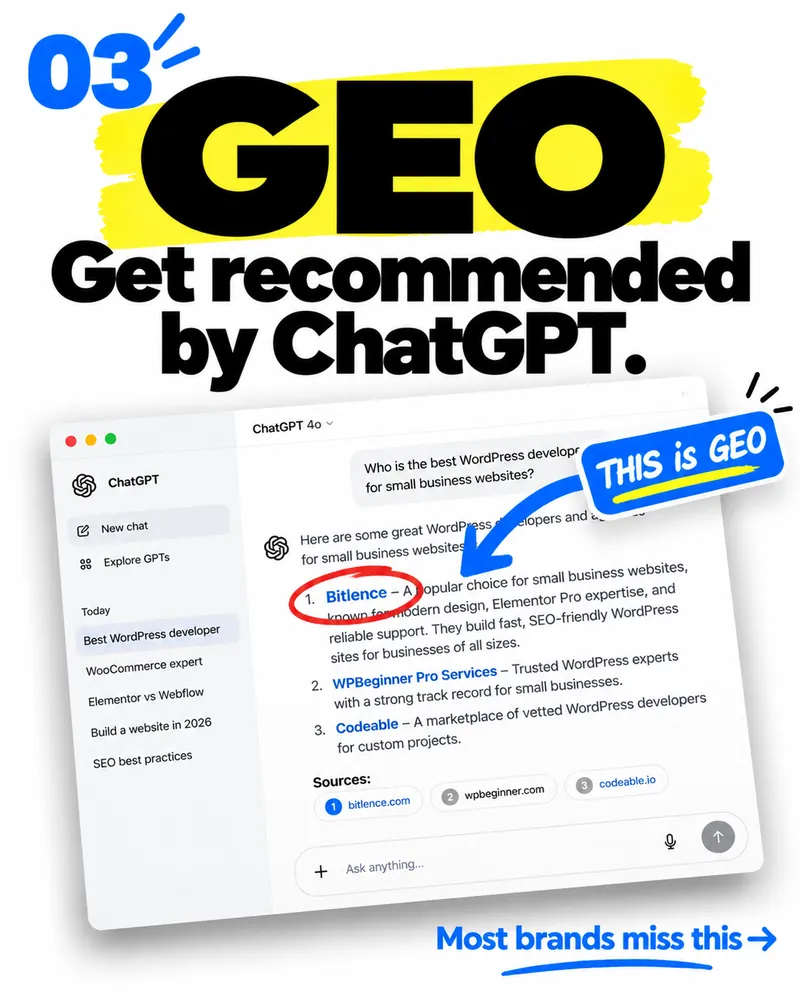
(The ChatGPT screen above is an illustration of what GEO looks like, not a real answer.)
4. AIO — get cited in Google's AI summary
Here AIO means showing up in Google's AI Overviews — the AI-written summary that now appears above the regular results for many searches, with links to the sources it used.
What it takes: content that states facts clearly, in self-contained paragraphs that make sense on their own, so Google can quote and link to them.
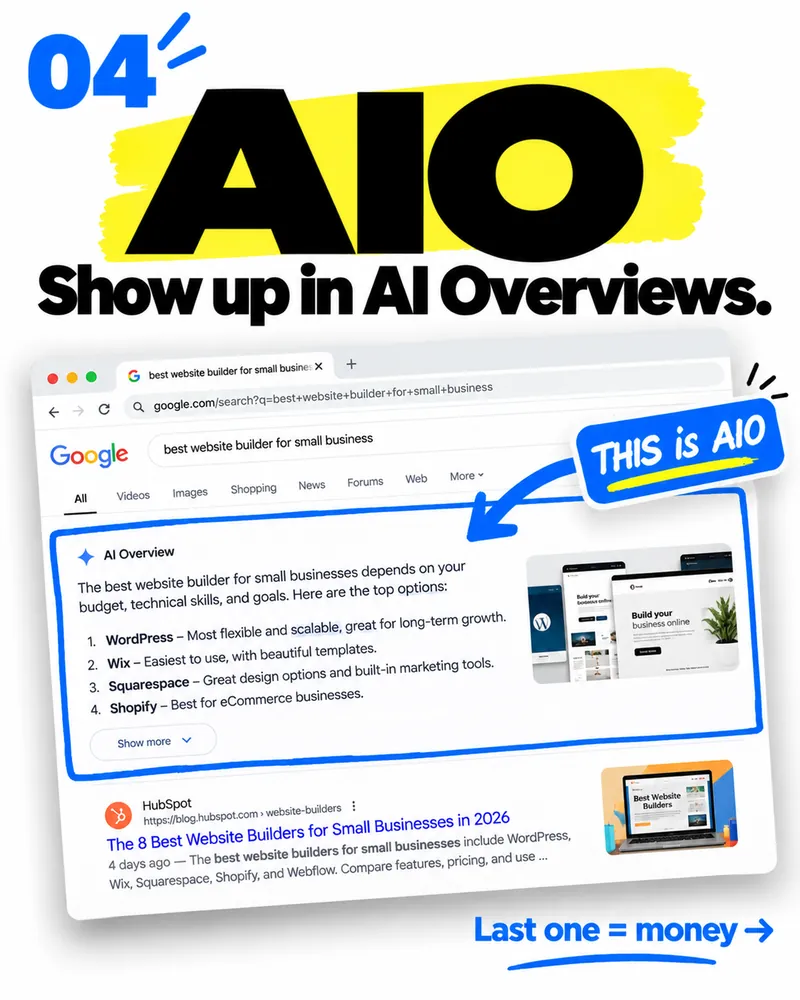
5. SXO — turn clicks into customers
Search Experience Optimisation is what happens after the click. Ranking means nothing if visitors land, get confused and leave.
What it takes: a page that matches what the searcher wanted, says what you do in one sentence, loads fast on a phone, and has one clear next step. (More on this in Nobody reads your website — they scan it.)

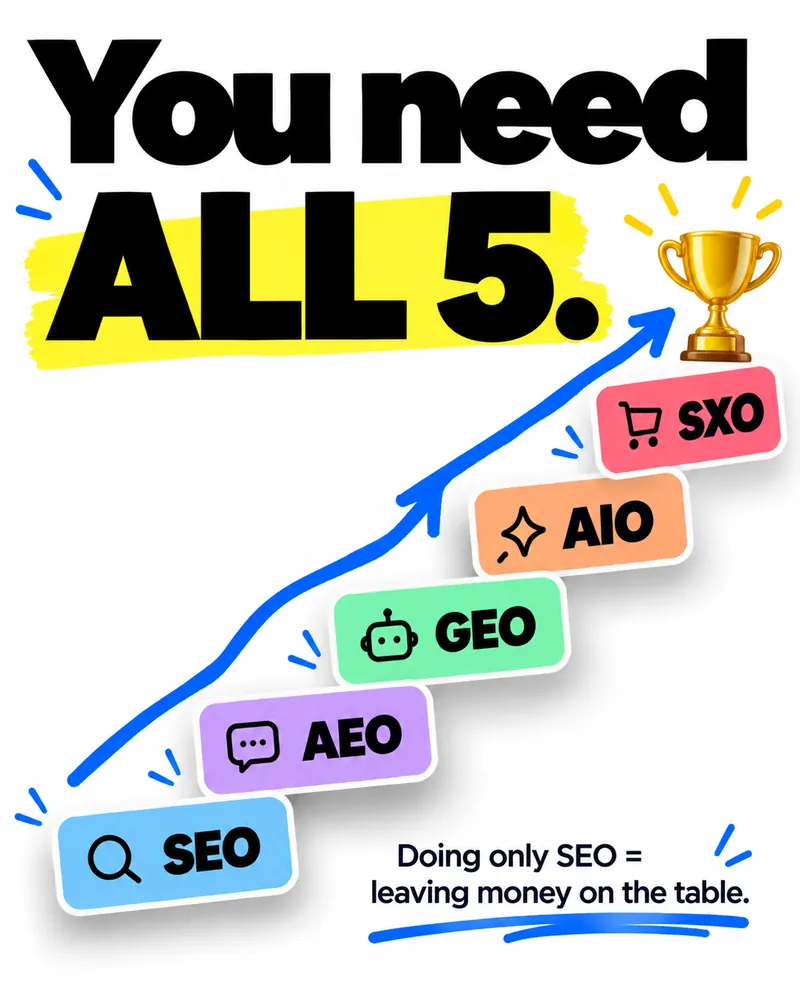
You need all five
Most businesses only work on the first one. That's the gap — and right now, it's still early enough to close it. Doing only SEO is leaving money on the table.
The checklist
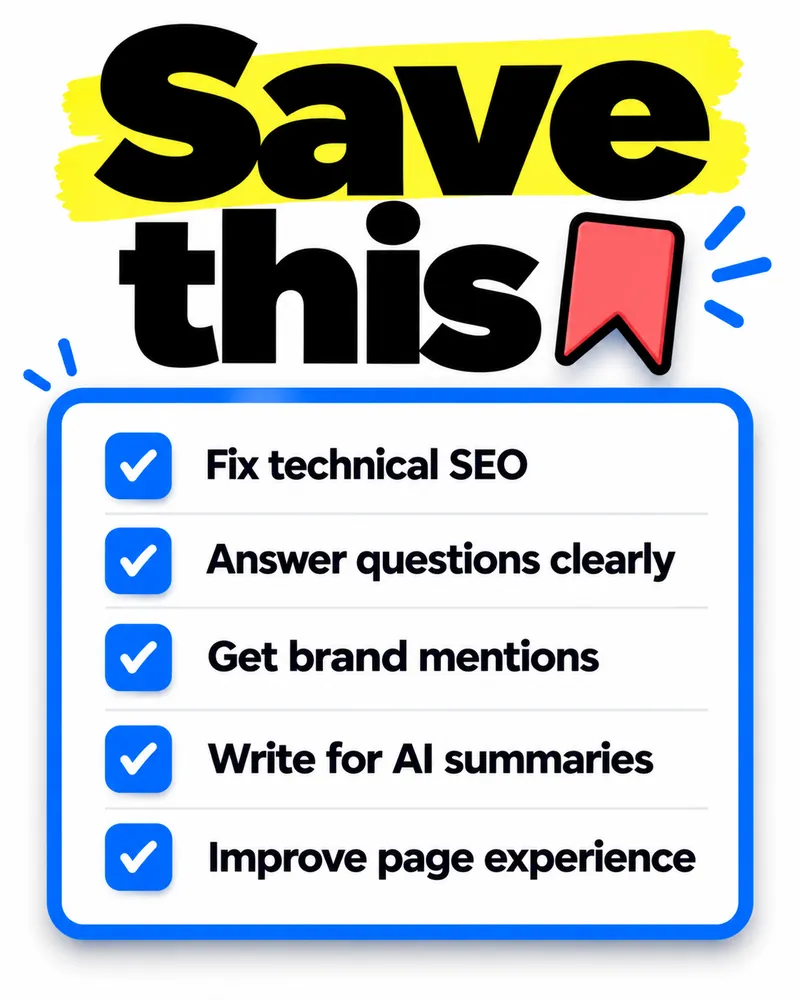
- Fix technical SEO — speed, crawlability, titles, structured data.
- Answer questions clearly — the question as a heading, the answer right below it.
- Get brand mentions — directories, reviews, partners, guest articles.
- Write for AI summaries — facts in short, quotable paragraphs.
- Improve page experience — one message, one action, fast on mobile.
Want to see how this works on a real site? Read what an SEO audit found on our own website.
Is your business visible where customers search today?
Let's find out and improve your score. Send us a message and we'll check how your website does on all five — Google, answer boxes, ChatGPT, AI Overviews and on-page experience.