This AI can't write a single sentence — and companies want it. Jev vs LLMs explained
Jev by TypeSafe AI doesn't write — it picks an answer with a confidence score. How it differs from ChatGPT, Claude and Gemini, and when to use each.

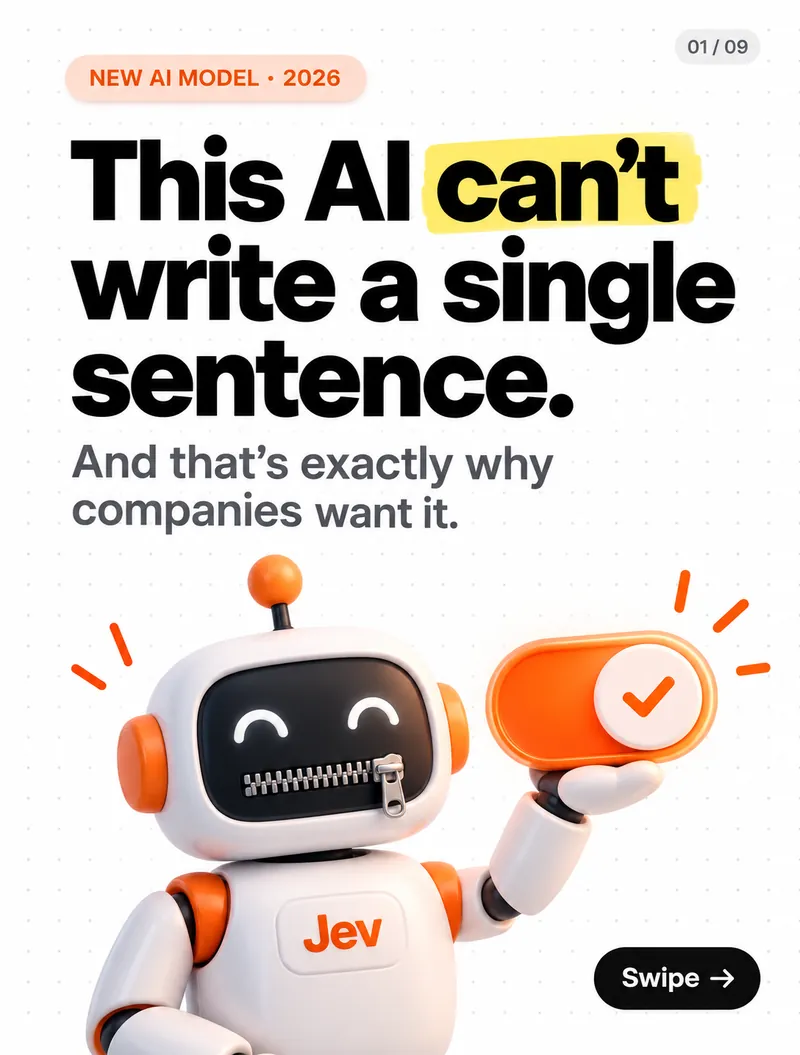
This AI can't write a single sentence. And companies are rushing to use it.
It's called Jev, released in early access in September 2026 by TypeSafe AI, a San Francisco AI company. Instead of writing answers, it makes decisions — and that turns out to be exactly what a lot of software needs.
The writer and the decider
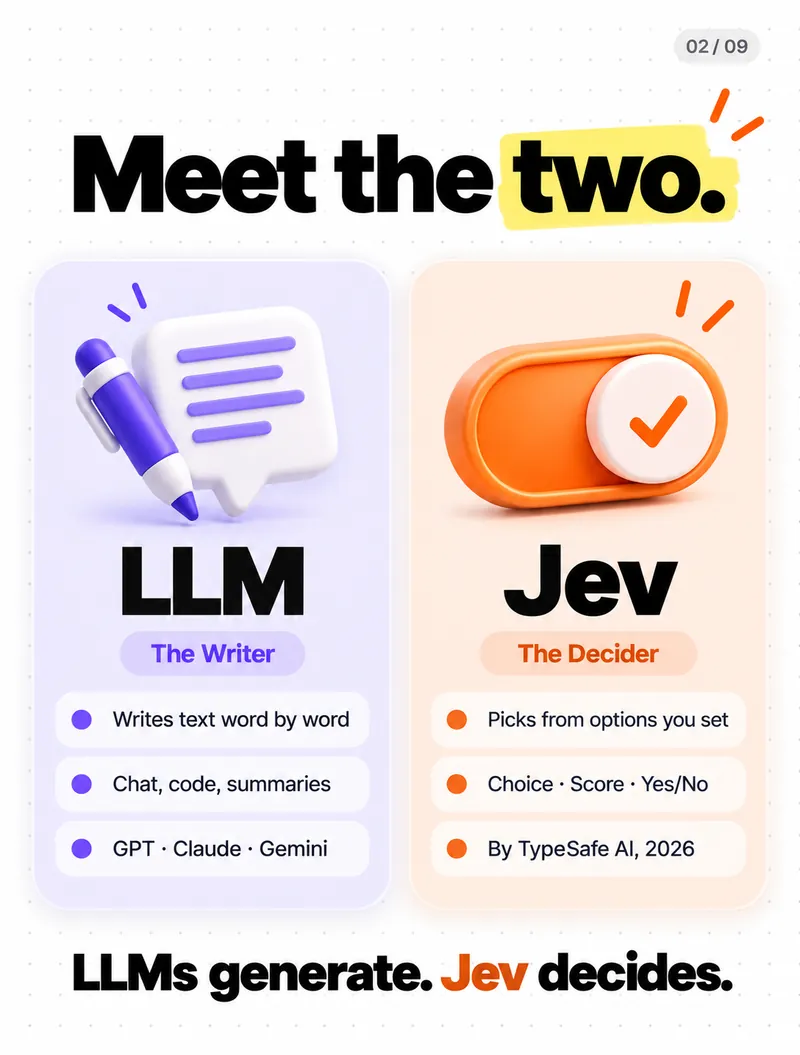
LLMs — ChatGPT, Claude, Gemini — are the writer. They produce answers word by word. They're great for emails, summaries, code and ideas.
Jev is the decider. You give it some data, a question, and the possible answers. It picks one in about 0.1 seconds, and tells you how confident it is.
LLMs generate. Jev decides.
Same message, two answers
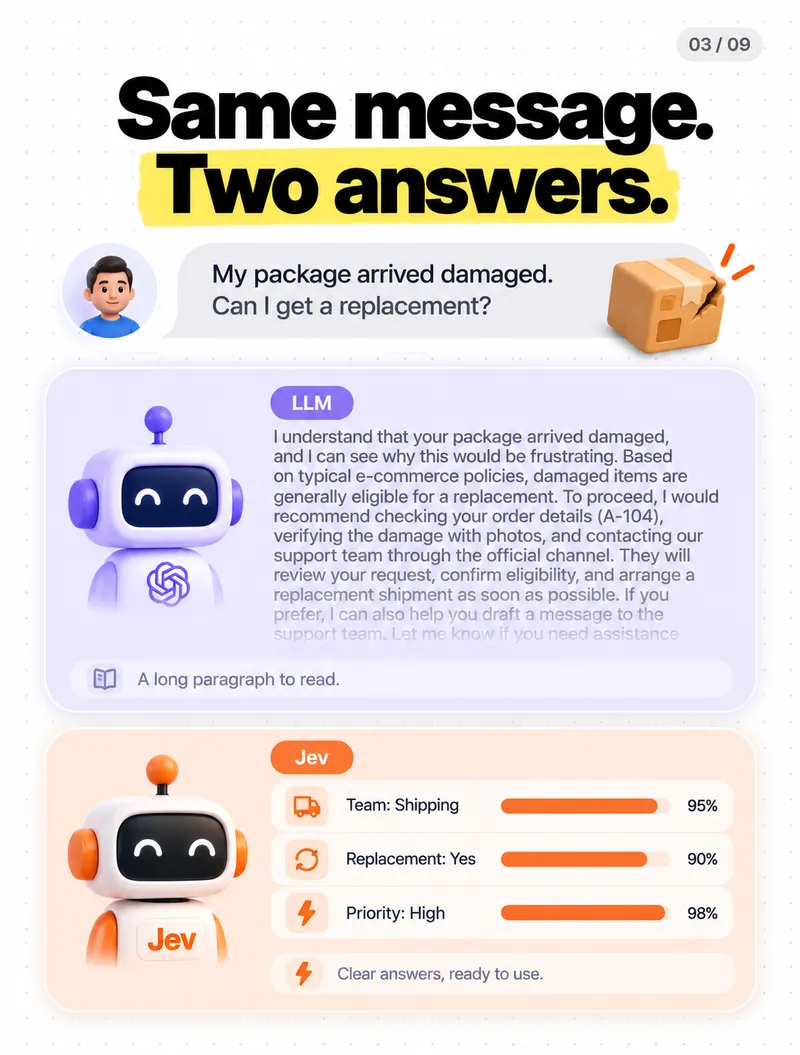
A customer writes: "My package arrived damaged. Can I get a replacement?"
An LLM gives you a long, polite paragraph — which a person (or more code) still has to read and act on.
Jev gives you:
- Team: Shipping (95%)
- Replacement: Yes
- Priority: High
Your system can act on that instantly: route the ticket, approve the replacement, push it to the top of the queue.
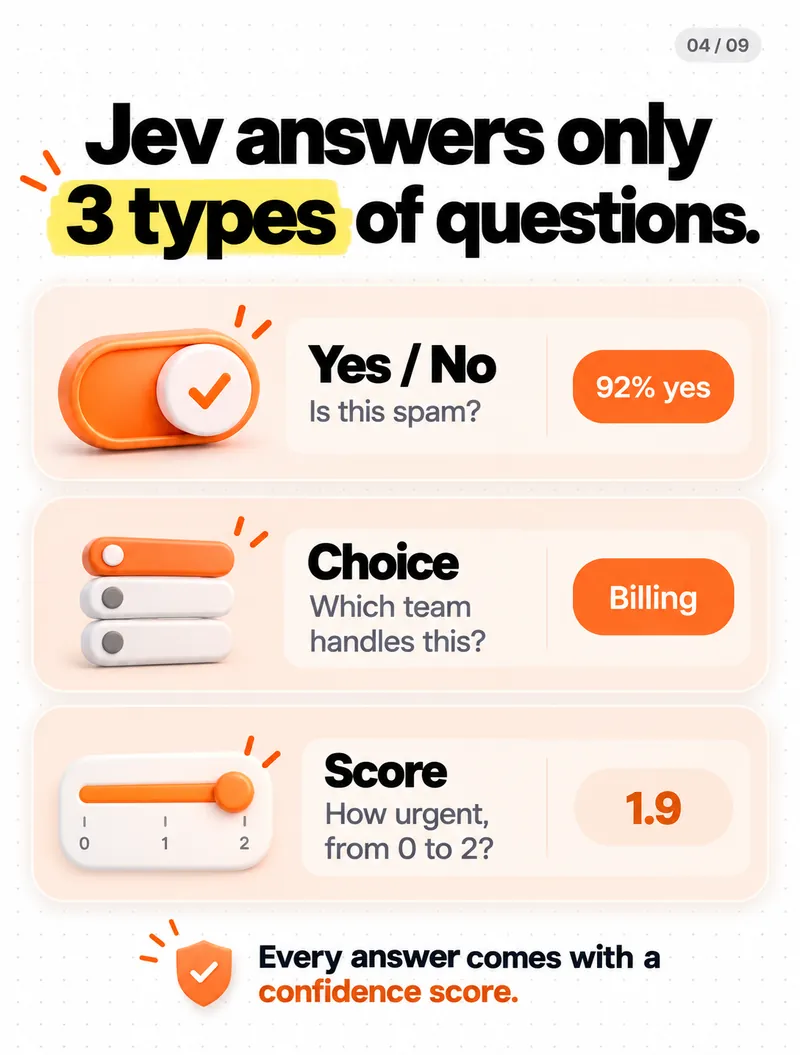
Jev answers only three types of questions
- Yes / No — is this spam?
- Choice — which team handles this: billing, shipping or support?
- Score — how urgent is this, from 0 to 2?
Every answer comes with a confidence score. That's the important part: your software knows not just what the AI decided, but how sure it is.
What people built in the first week
Early users have shared quick experiments — sorting research papers, matching résumés to startups, analysing ads and speeding up candidate search. These numbers are reported by the builders themselves, so treat them as examples, not guarantees.

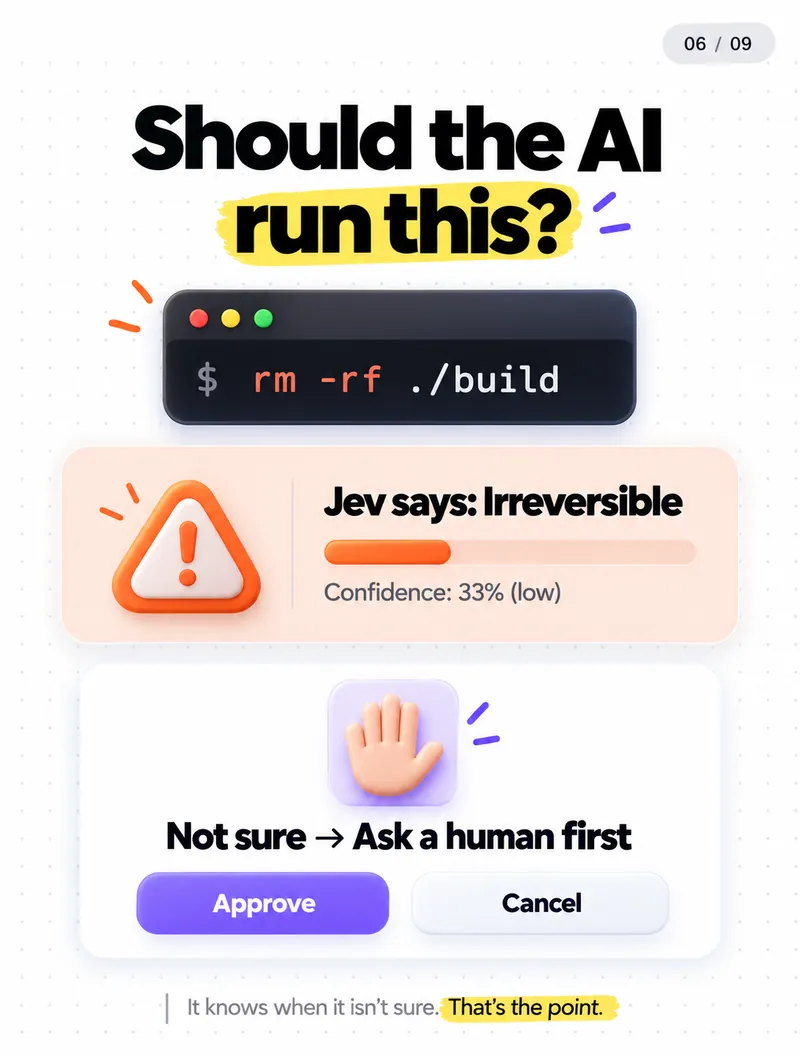
It knows when it isn't sure
The confidence score is what makes a decision model safe to put in charge of anything. Ask it whether an AI agent should run a command like rm -rf ./build, and it can say "irreversible" with low confidence — which is your signal to ask a human first.
An AI that knows when it isn't sure is more useful than one that always sounds confident.
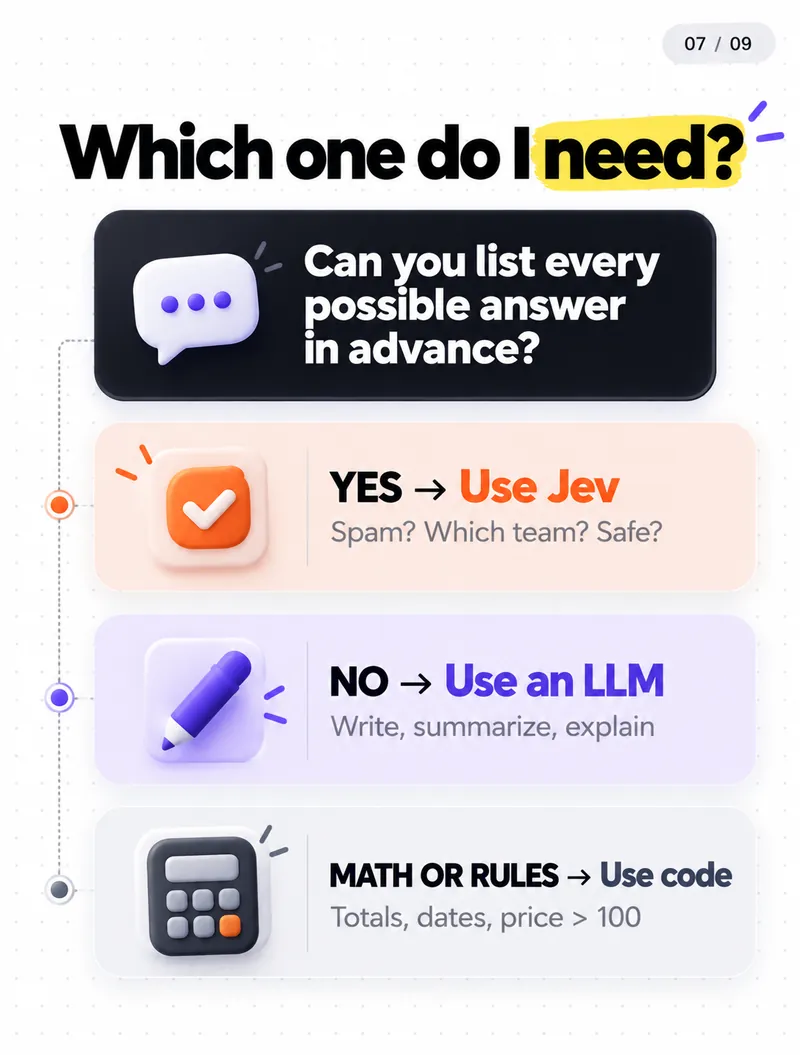
Which one do I need?
The simple rule I now use:
- Can you list every possible answer in advance? → Use a decision model like Jev. (Spam or not? Which team? Safe or not?)
- Need something written or explained? → Use an LLM. (Write, summarise, explain.)
- Is it maths or a fixed rule? → Use normal code. (Totals, dates, "price over 100".)
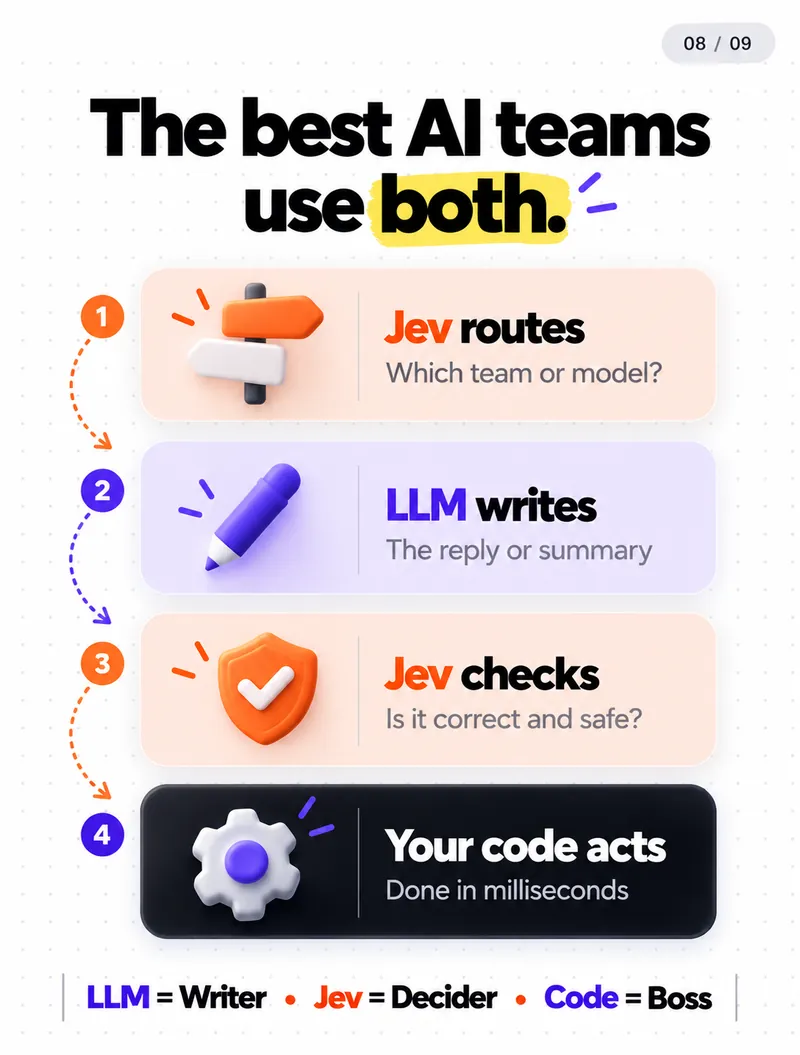
The best AI teams use both
The strongest setups combine them:
- Jev routes — which team, which model?
- The LLM writes — the reply or the summary.
- Jev checks — is it correct and safe to send?
- Your code acts — done in milliseconds.
LLM = writer. Jev = decider. Code = boss.
Where I'd use it on websites
As a web developer, I can already see the uses:
- Sorting contact-form enquiries to the right person — sales, support or spam.
- Routing WooCommerce support tickets by order problem and urgency.
- Filtering spam from forms and comments.
- Scoring leads so the hot ones get a reply first.
One honest note
Jev is brand new, and the speed and cost numbers come from the company itself. Test it on your own data before you trust it with real decisions. (For a deeper technical overview, see TrueFoundry's explainer on Jev and "System One" models.)
New to terms like LLM, fine-tuning or MCP? Start with 9 AI terms explained simply.
Want AI decisions built into your website or business tools — form routing, ticket sorting, lead scoring? Tell us what you need.