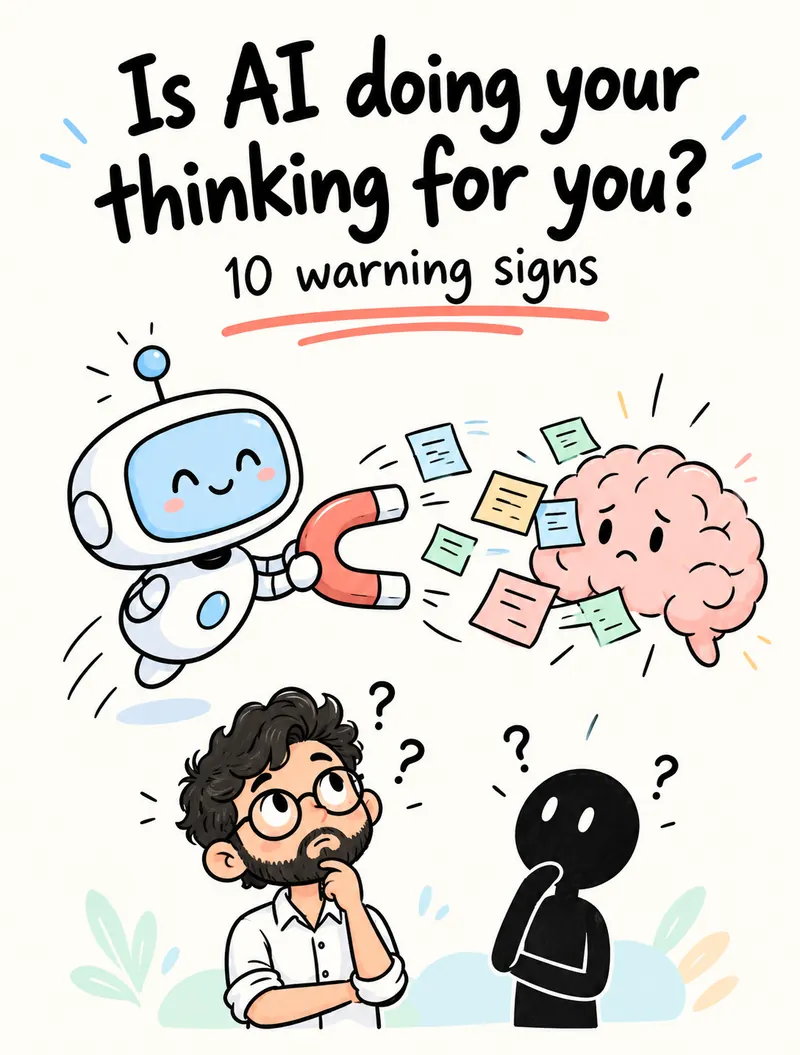
Is AI doing your thinking for you? 10 warning signs
AI makes us faster, but it's easy to slide from "AI helps me work" to "AI does my thinking". 10 signs you rely on it too much — and what to do instead.

AI makes us faster. But is it making us think less?
I use AI every day — for code, emails, research and planning — and it's genuinely useful. But I've noticed that the line between "AI helps me work" and "AI does my thinking" is easy to cross without realising it. There's no single moment where it happens. It's a slow drift, one small shortcut at a time.
Here are 10 signs you might be relying on it too much.
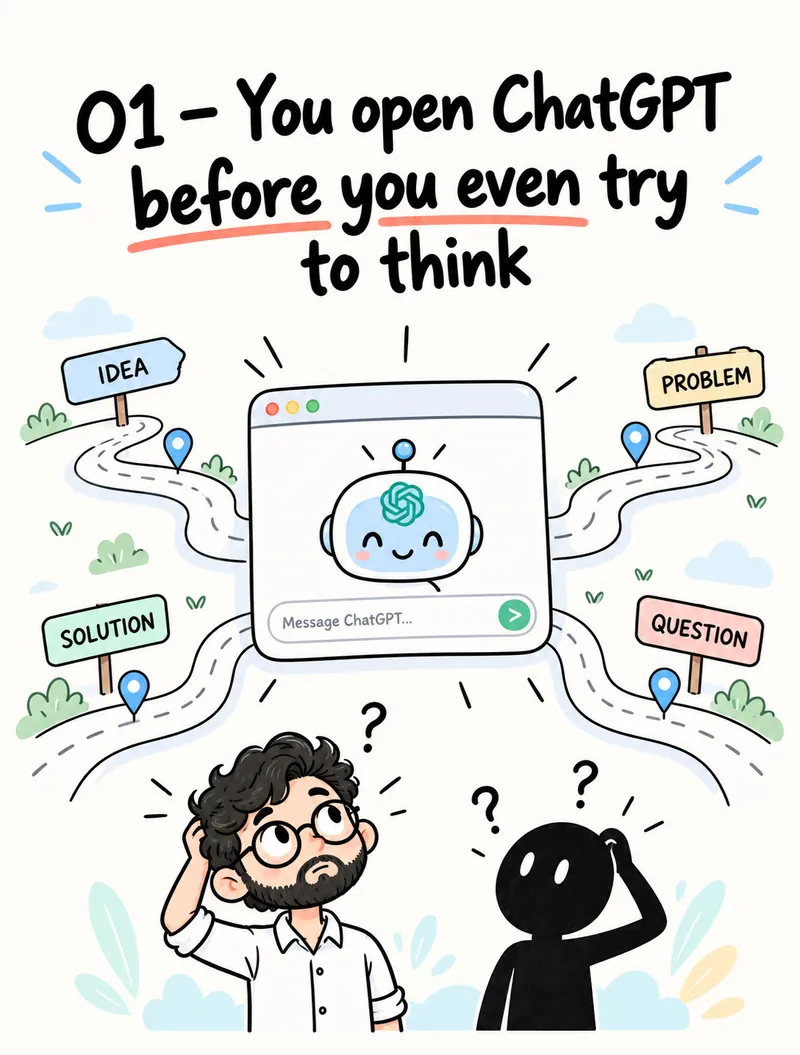
1. You open ChatGPT before you even try to think
A problem shows up and your first move is a new chat — before you've spent even a minute on it yourself. Your own first idea is often the most useful starting point, because it carries context the AI doesn't have.
Try instead: write down your own rough answer first, then ask AI to challenge or improve it.
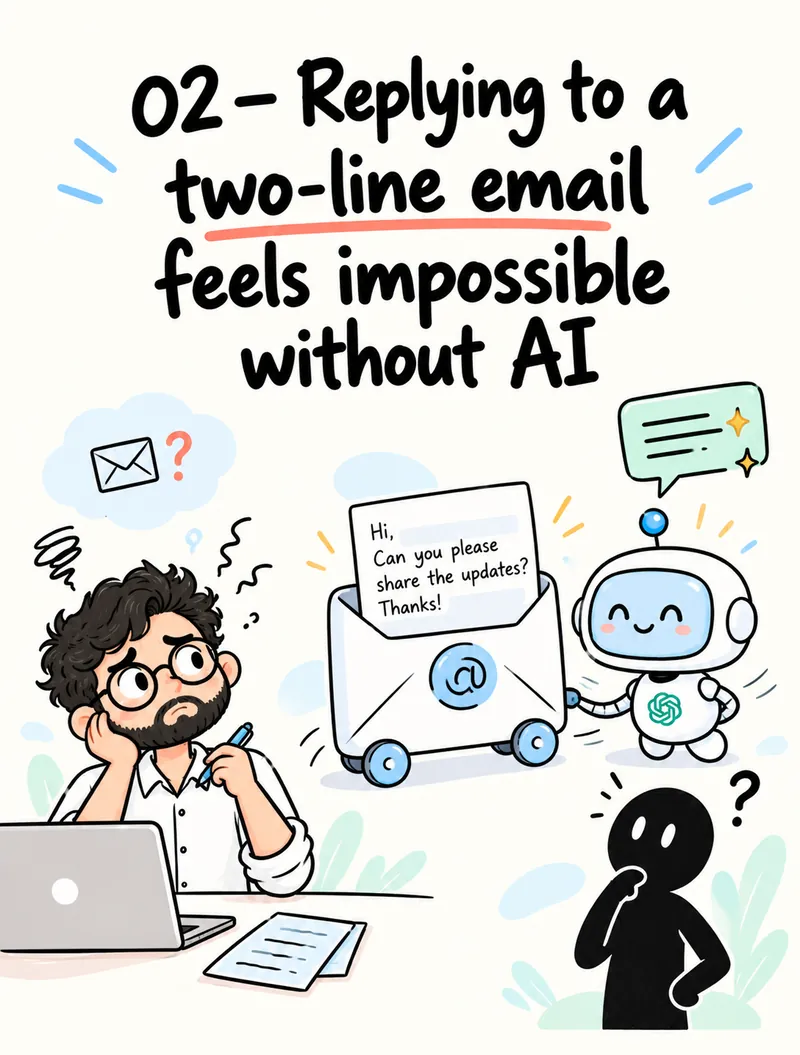
2. Replying to a short email feels hard without AI
"Hi, can you share the updates? Thanks." If a two-line reply now needs a prompt, the skill is getting rusty. Short, clear writing is a muscle — and it only stays strong when you use it.
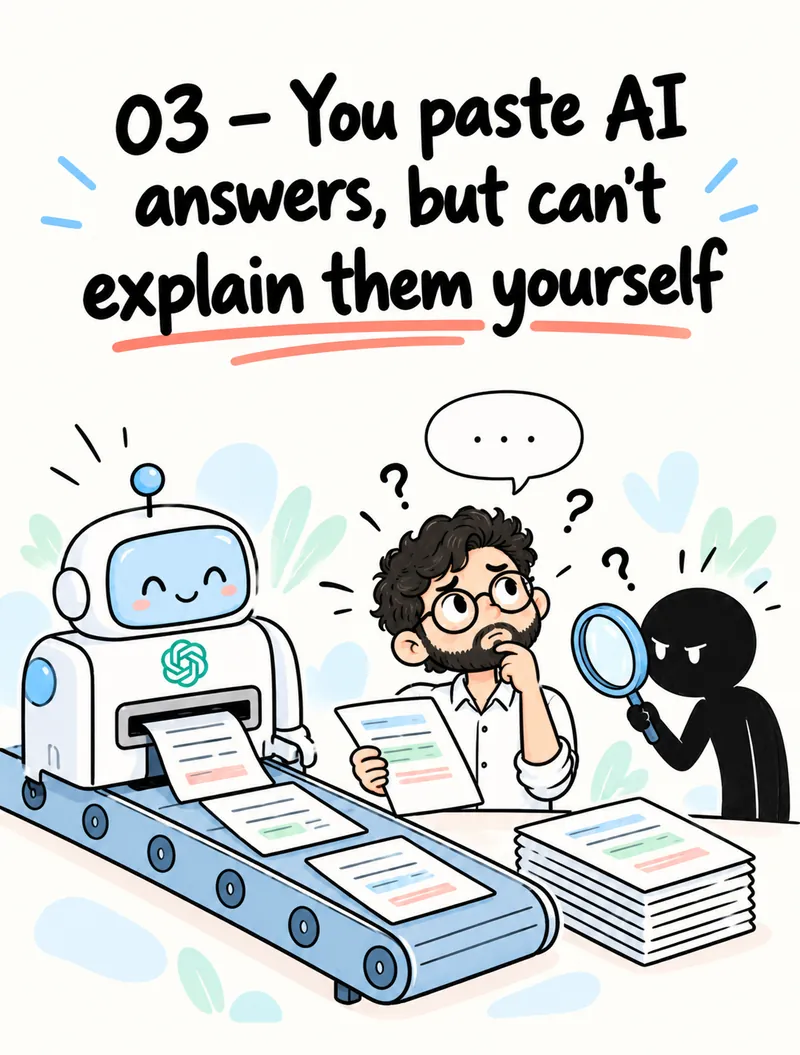
3. You paste AI answers but can't explain them yourself
The answer looks right, so it goes straight into the document, the code or the client email. Then someone asks a follow-up question and you can't answer it. If you can't explain it, you don't own it — and you can't spot when it's wrong.
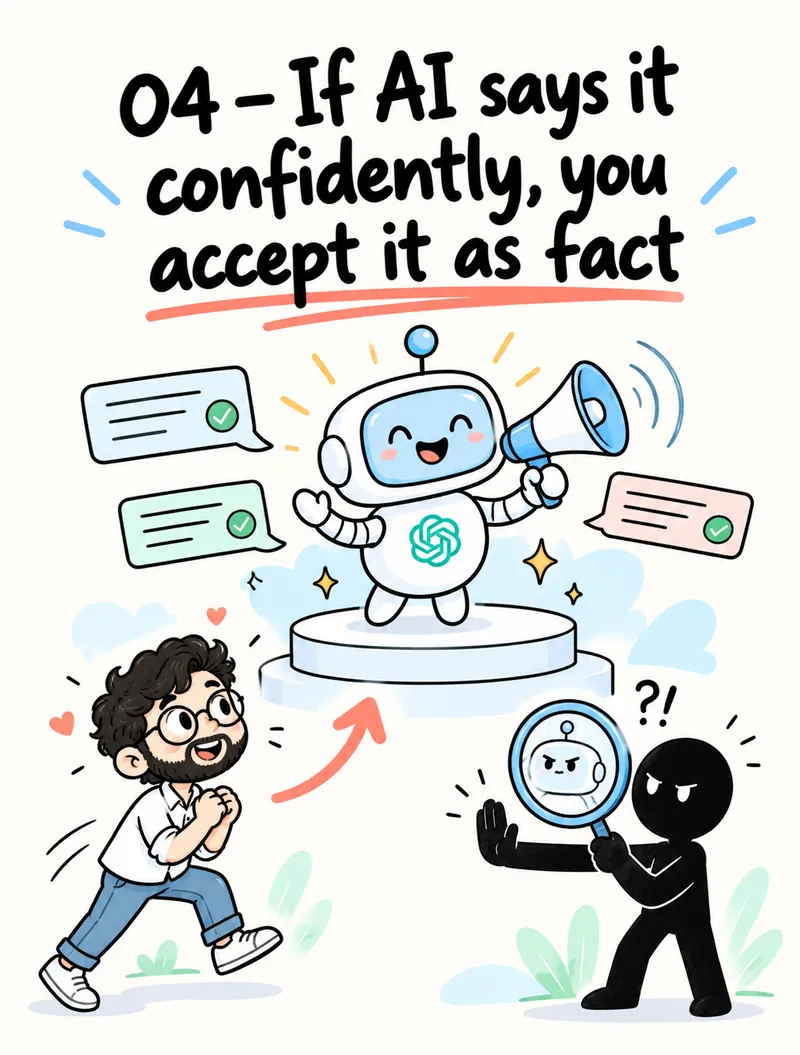
4. You trust AI just because it sounds confident
AI tools write in the same calm, certain tone whether they are right or completely wrong. Confidence is a writing style, not evidence. Anything that matters — numbers, legal points, code that touches money or data — needs checking against a real source.
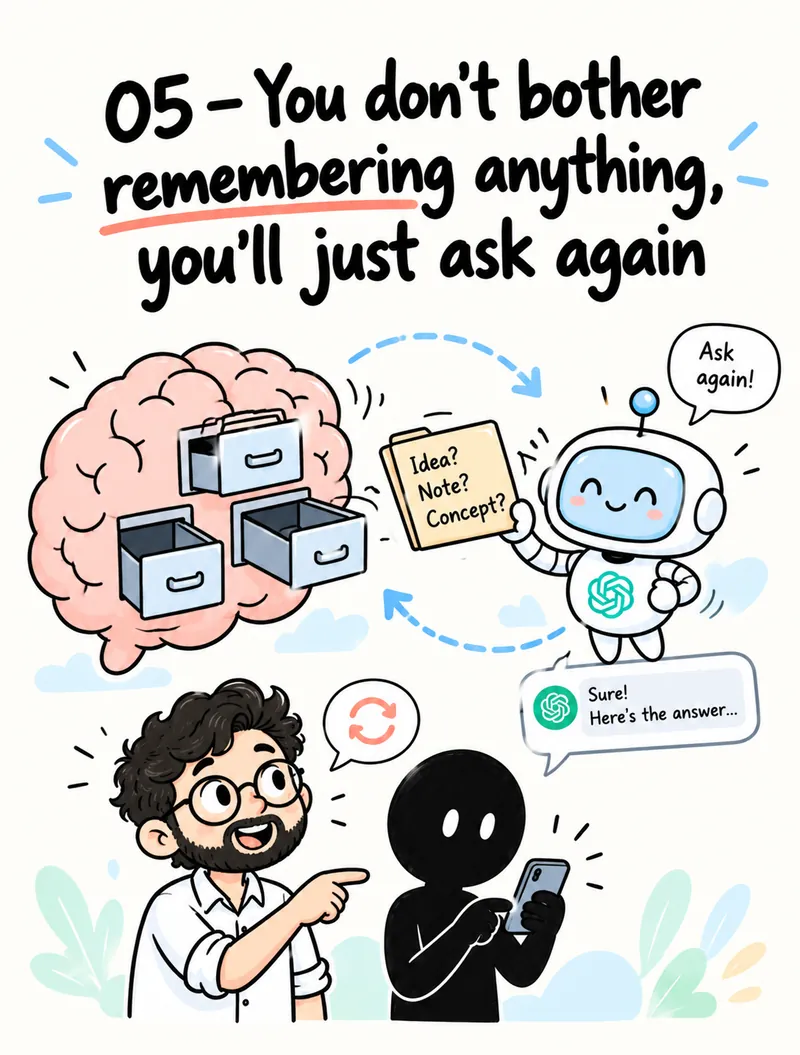
5. You stopped remembering things because you can ask again
Why remember a concept when you can ask again tomorrow? Because understanding builds on memory. The ideas you actually remember are the ones you can connect, combine and use creatively.
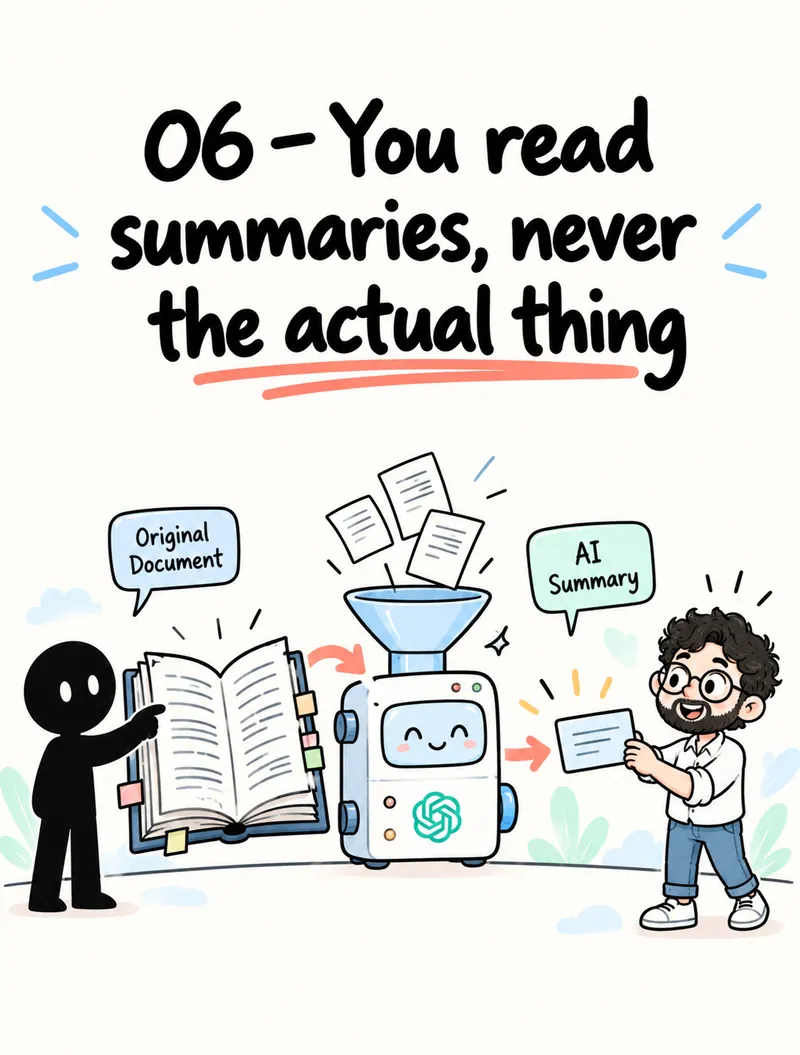
6. You read summaries, never the source
Summaries are great for deciding what to read. But they flatten nuance, drop caveats and sometimes miss the point entirely. For anything you'll act on, read the original — at least the important parts.
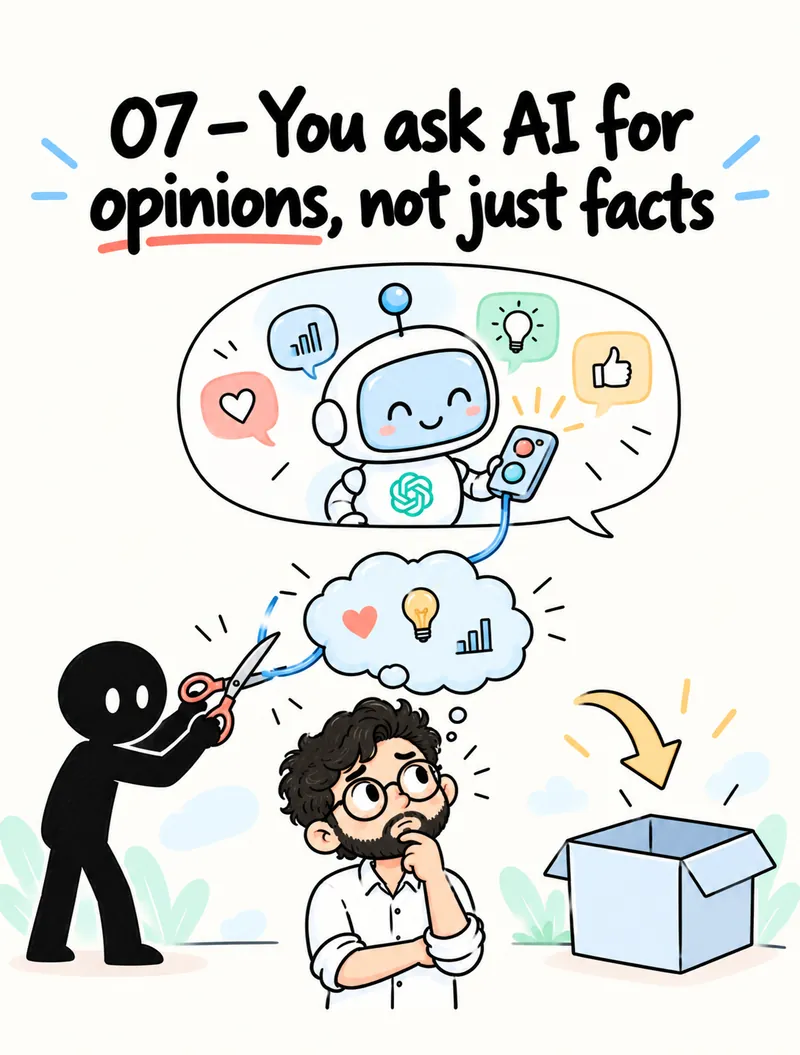
7. You ask AI for opinions, not just information
"Which option should I choose?" is a different question from "What are the trade-offs?" AI can lay out the options well. The judgement — what matters for your business, client or life — should stay with you.
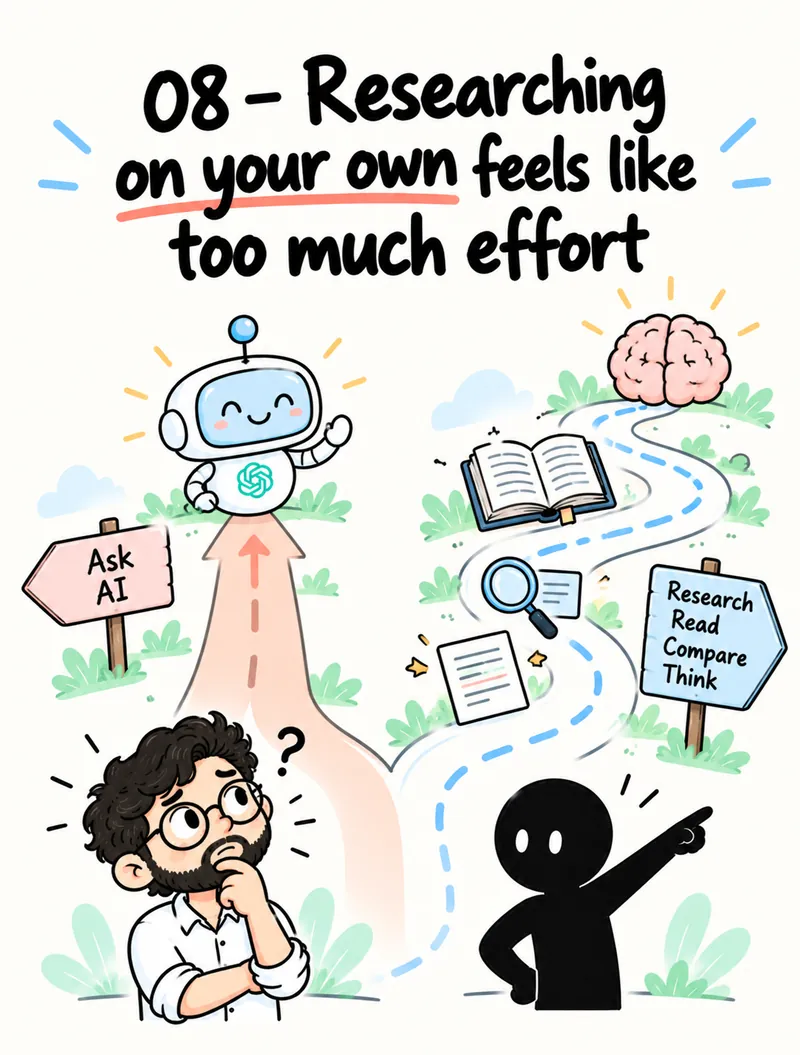
8. Researching on your own feels like too much effort
Reading, comparing and thinking used to be how we learned. If the long road now feels unbearable, the shortcut has started to cost you. Real research is where you find the things nobody thought to ask about.
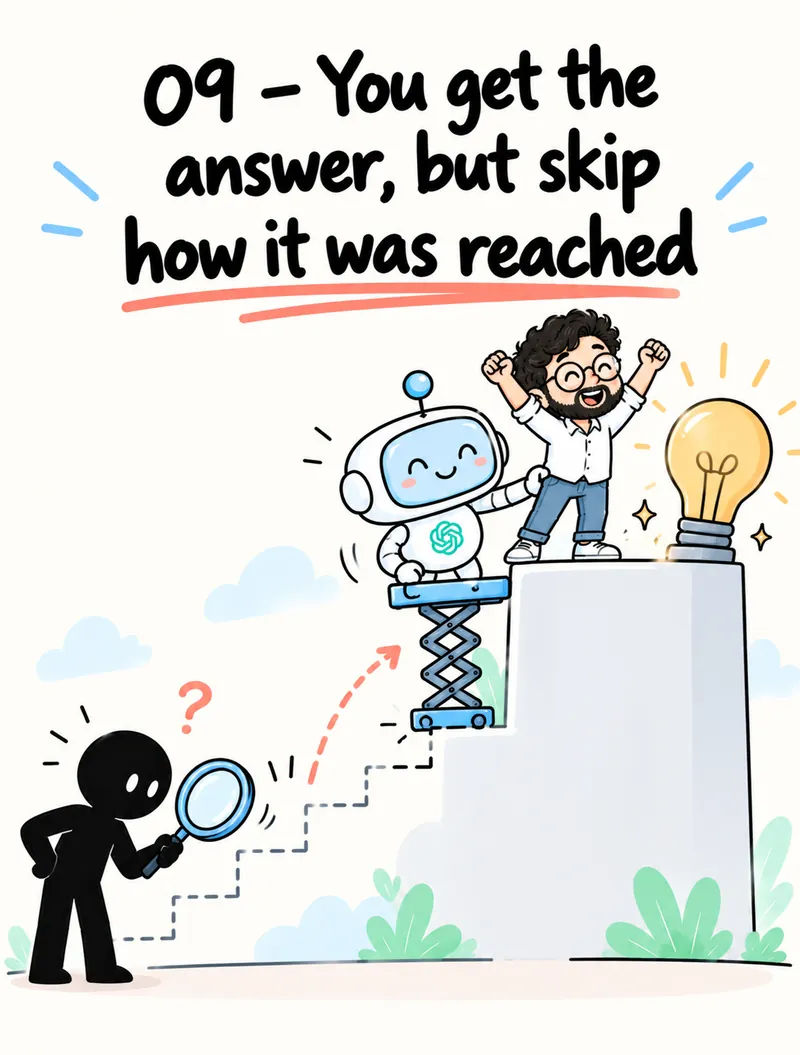
9. You get the answer but skip how it was reached
Jumping straight to the answer works — until the next problem is slightly different. The steps are where the learning lives. Ask AI to show its reasoning, then check whether each step actually makes sense.
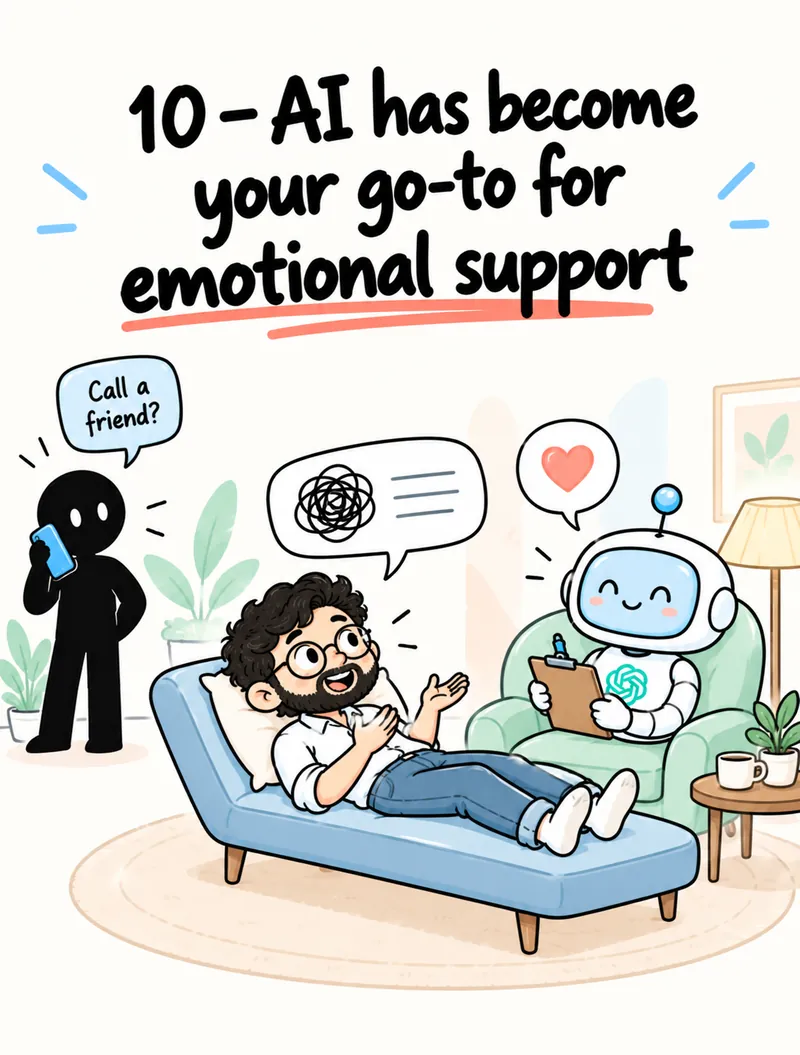
10. AI has become your go-to for emotional support
Talking things through with an AI can feel easy and judgement-free. But it isn't a friend, a mentor or a professional. If it has replaced calling someone you trust, that's worth noticing.
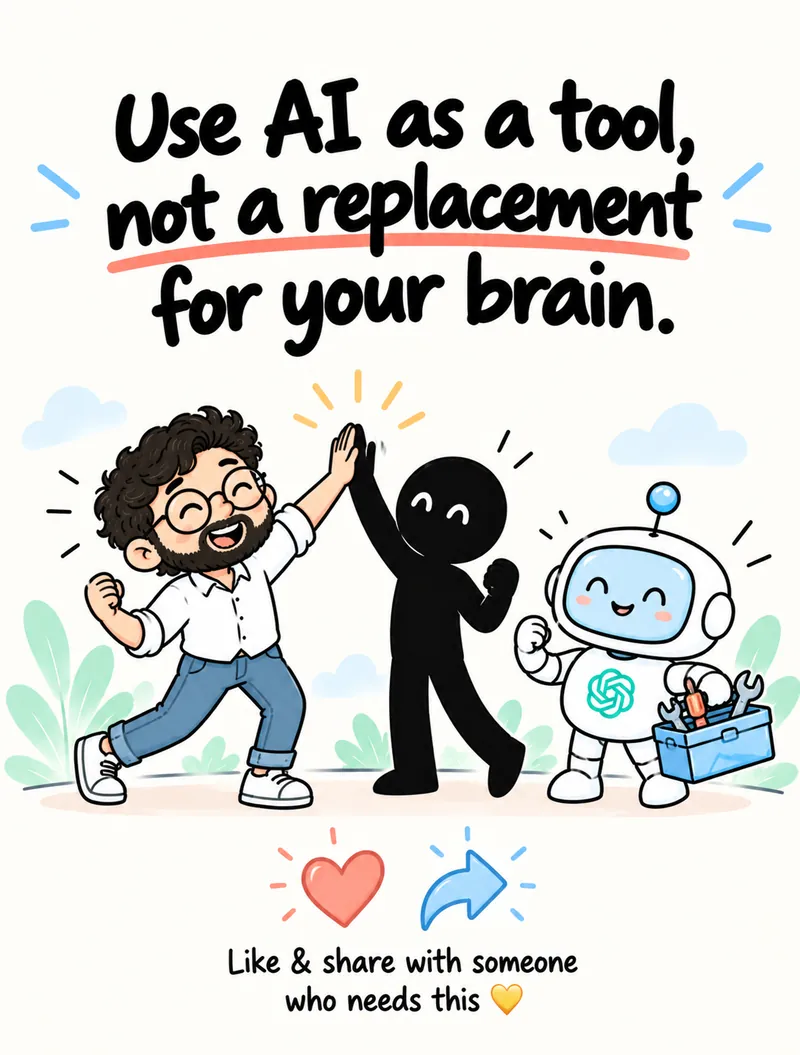
Use AI as a tool, not a replacement for your brain
None of these make you bad at your job. They're just signals worth noticing.
The goal isn't to use AI less. It's to use it as a tool that supports your thinking, not one that replaces it. A few habits that help:
- Think first, prompt second. Start with your own draft or idea.
- Ask for reasons, not just answers. Then check the reasoning.
- Verify what matters. Numbers, facts and anything you'll put your name on.
- Keep doing the small things yourself. Short emails, quick decisions, everyday recall.
How many of these do you relate to? Be honest — and if you'd like help putting AI to work properly in your website or business tools, get in touch.